✔︎ Express delivery in 2–5 days after dispatch


Mother-of-the-Groom Dresses for a Saudi Wedding
At a wedding, there is usually a point when someone asks the groom’s mother to stop greeting guests for a photograph. She is still holding her bag, someone is moving a chair and the bride’s mother has already taken her place. This is the moment worth picturing when you choose your dress. You want to be able to take your place easily and feel like yourself when the photographs come back. A good choice starts with the kind of wedding the two families are hosting, then takes in the colour, neckline and practical details that will make the dress comfortable for you through a long evening.
Start with a conversation between the families
Ask the couple which parts of the celebration you are expected to attend, whether there is a dress code for each part and what they have in mind for the family photographs. A hotel ballroom in Riyadh, a small family dinner in Jeddah and a reception that starts outdoors can all call for different proportions. Some families may plan separate events or have preferences around sleeves, neckline and photography. Let the hosts tell you what applies to their day. A quick call early in the search saves you from guessing based on the city or on somebody else’s wedding.
Share two or three colour options with the bride’s mother and ask what she is considering. If she has already chosen a strong colour, you could stay in the same level of formality and pick a softer tone with enough separation in photographs. If both families want a shared palette, agree on a range and send actual fabric pictures in daylight. An ivory or very pale champagne may read close to bridal white on camera. Ask the bride directly if you want to wear one of those shades, especially if you will stand next to her in group portraits.
A useful message can be very short. Tell the couple what you are considering, name the colour and show one full-length view and one close view of the neckline. Ask if that combination feels right for the room and the family photographs. If everyone likes it, you can then decide on sleeves, shoes and how formal the finish should be without reopening the colour question every time you see a different dress.
Think about your place in the photographs
The groom’s mother is likely to appear in more than one kind of picture. In a standing group photograph, the length of the skirt and the colour are easy to see. A seated picture may show only the neckline and cuffs. In a photo taken while you greet a relative, a shoulder detail or the sleeve may be the first thing the camera sees. Think about the photos you will want to keep. If most of them include the couple and both families, you may prefer one clear feature near the face and a quiet line through the skirt.
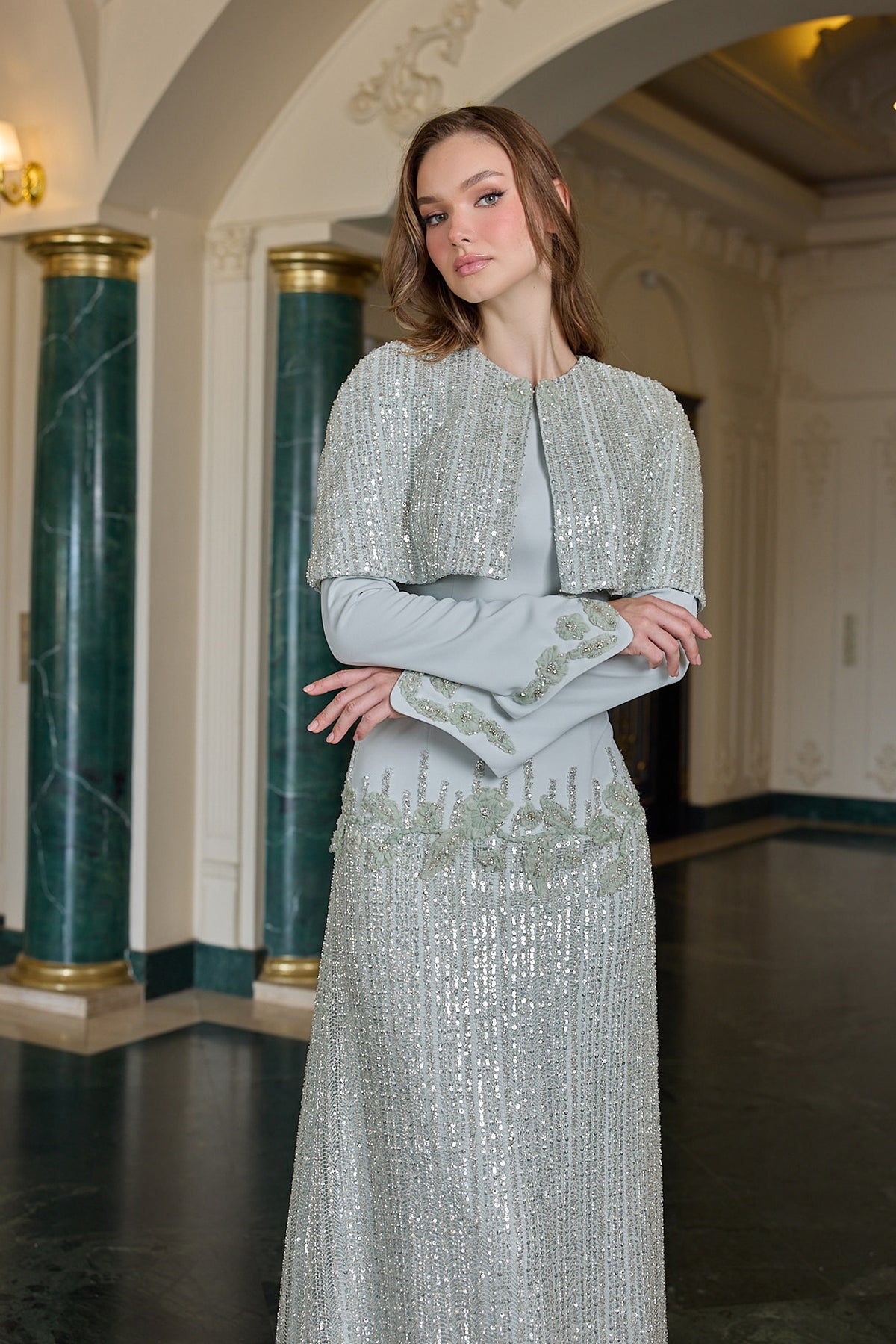
Genevieve in powder blue shows how a colour can hold its own in a group picture. The gold-tone scrolls sit on the front of the bodice and the off-shoulder bands leave the collarbones visible. That makes it a useful option to compare if the family prefers an open neckline. In Juliana in Silver Sage, the round neck, long sleeves and short cape give a different amount of coverage. Both have long skirts, and the differences are clearest in a photograph taken from the waist up.
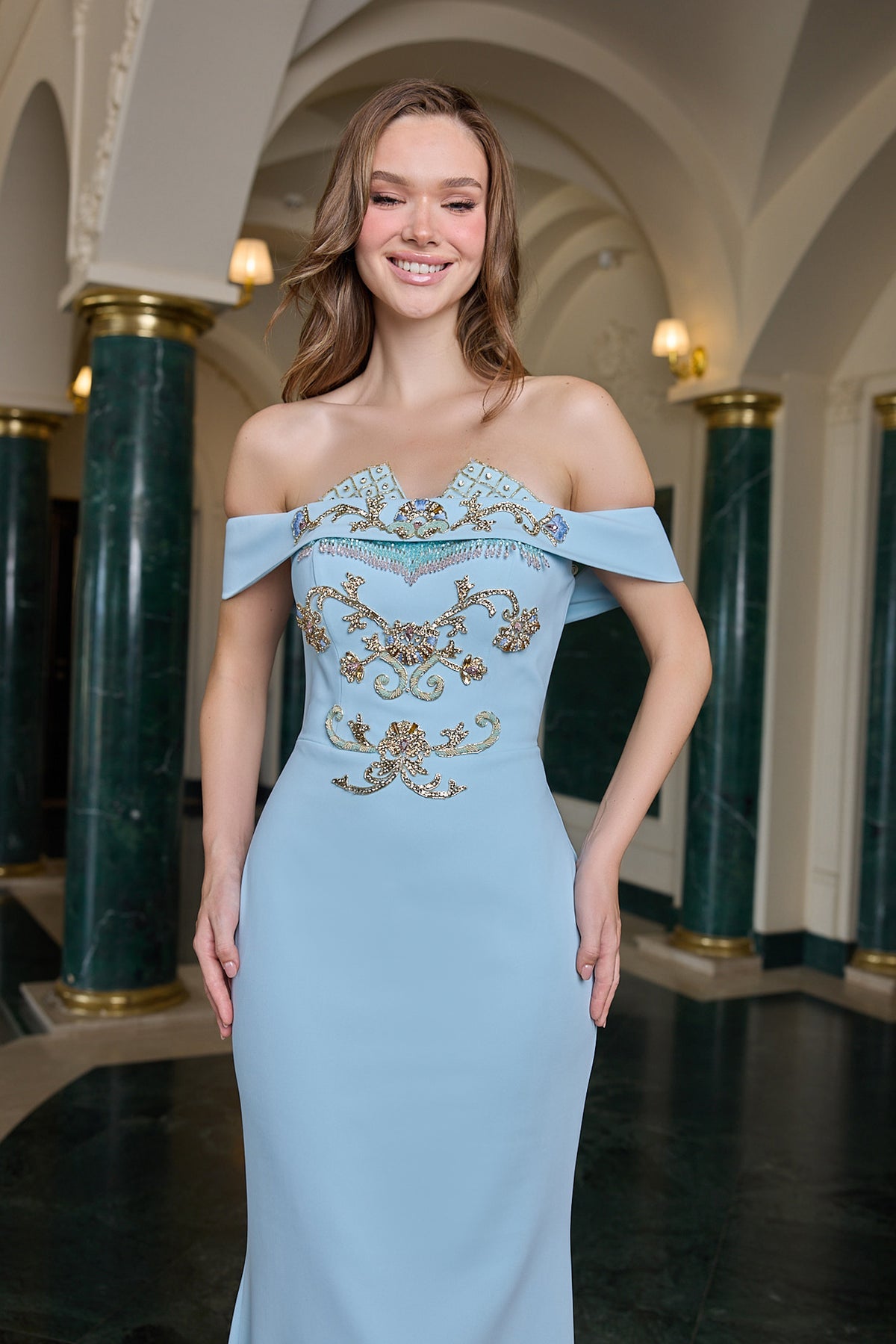
Set your shortlisted photographs next to the groom’s outfit if you know its colour. A dark suit can make pale dresses look lighter. A bright background or strong flash can flatten a delicate pastel. The safest way to judge the balance is to look at the colours together in the kind of light you expect. If you are shopping at a distance, compare the product gallery’s shade and daylight views and ask the stylist what they have seen in fittings. The image on a single screen can shift with the settings.
Choose coverage by checking the front, side and back
Some women want a long sleeve because they like the look. Others are choosing for a family preference, a particular ceremony or the temperature in the reception room. Whatever matters to you, look at the three main views together. A high neckline can come with a wide opening at the back. A cape may cover the shoulders with your arms at rest and open when you lift them. A sheer cuff will look more transparent when the camera is pointed towards a window. The full product gallery gives you a better sense of these differences than a single front photograph.
If you want a closed line across the shoulders and sleeves to the wrist, Avelisse is a useful point of reference. Its round neckline is smooth and the decoration sits at both hips. The side folds give the skirt some width at the hem. Elarisse has the same long-sleeved idea with a split neckline and embellishment at the cuffs. That places more detail around the face and hands. If you are choosing between the two, decide which neckline you like at dinner distance and how much attention you want at the waist.
Look for details you can live with through the evening
Bring the shoes you plan to wear to the fitting. Walk as you will at the venue, including a long stride and a turn. Sit on an ordinary chair and try to rise without having to rearrange the whole skirt. Hold the clutch in the hand you usually use. If the gown has a floor-length cape, see whether you can gather a single panel while taking a step. Those movements are more useful than standing straight in a mirror for five minutes. They tell you how the dress will behave on stairs, between chairs and in the receiving line.
If the skirt is fitted through the hips, look at where the hem and the waist settle when you sit. If the bodice is embellished, check the point where your arms naturally touch it. Raise a hand as if you were waving or offering a greeting. A sleeve can look perfect at rest and pull at the shoulders when you reach out. You can also check whether a bracelet would catch at a decorated cuff. These are small choices, but they are the ones you notice repeatedly when you spend several hours in an outfit.
Ask the person helping you to take one photograph in front, one from the side and one seated. At home, compare them while thinking about the venue. A dress that looked a little plain standing still may have exactly the line you want in the group photograph. Another might have a train that you love in the fitting room but would prefer to shorten for a crowded reception. Ask a qualified fitter what can be changed without disturbing the motif or the edge of the skirt.
Make the accessories earn their place
A mother-of-the-groom outfit can look more considered when one piece of jewellery reflects a detail already on the gown. A pearl can pick up the pale cuff of a cape dress. A warm metal earring may echo the embroidery on a powder-blue or mint bodice. If you are wearing a decorated neckline, compare it with a bare neck first and add a chain if you like the extra detail. On a gown with decoration at the hips, hold the bag slightly away from the embroidery before deciding how large it needs to be.
If you are choosing shoes for a long evening, try them on the floor surfaces closest to the venue. Carpet and smooth stone feel different under a narrow heel, and a heel that suits the entrance may be less practical on a lawn. A second pair can make sense if the height is close enough that the hem stays clear. Take both to your fitting so you can see where the hem ends in each pair. Check the bag with what you actually plan to carry, then practise holding it without having to keep adjusting the sleeve or cape.
Leave time to make a measured decision
Take your current measurements and check them against the chart on the specific product. UK, EUR and other labels are useful references, but measurements help most when the bodice has very little ease or the hip is fitted. Ask about the current availability of your size and whether any alteration or made-to-order lead time applies before you plan around a delivery date. If you are looking across borders, use the version of the store for the country where the order will be delivered and read the product’s terms before you commit.
Make your final decision with two outfits on the shortlist. For each one, you should know how it looks with the family palette, which parts of the body it covers from the back and sides, and whether you can sit and greet guests comfortably. Then look at the photograph in which you recognise yourself most readily. The groom will remember that you were beside him. Choose a dress that lets you spend the evening being there.